GuideOlivko Olive Oil
How to Choose Genuine Extra Virgin Olive Oil: 8 Things to Check
Not all olive oil is the same. Here are eight things to check on the label before you buy extra virgin olive oil.
Published 5 min read
In this article
The olive oil shelf is full of choices — extra virgin, virgin, pure, light, pomace — and the prices vary widely. So how do you choose genuine extra virgin olive oil that is really worth it? This guide walks through eight things to check, so you know exactly what you are paying for.
1. Understand the olive oil grades
The grade tells you how the oil was made and its quality:
- Extra virgin — the top grade. Pressed mechanically from olives without chemical treatment, with low acidity and a fresh taste.
- Virgin — also mechanically pressed, but with looser taste and acidity standards.
- Pure / olive oil / light — usually refined olive oil blended with a little virgin oil. The taste is more neutral.
- Pomace — extracted from the olive pulp left after pressing. The lowest grade.
If you want the best taste and quality, look for the words extra virgin clearly on the label. "Light" does not mean fewer calories — it refers to a lighter colour and flavour.
2. Check the acidity
Free acidity is one of the measures of olive oil quality. The International Olive Council (IOC) sets a maximum of 0.8% for extra virgin. The lower the number, the better the fruit and pressing usually were. Not every brand states acidity on the label — brands that do are easier to judge.
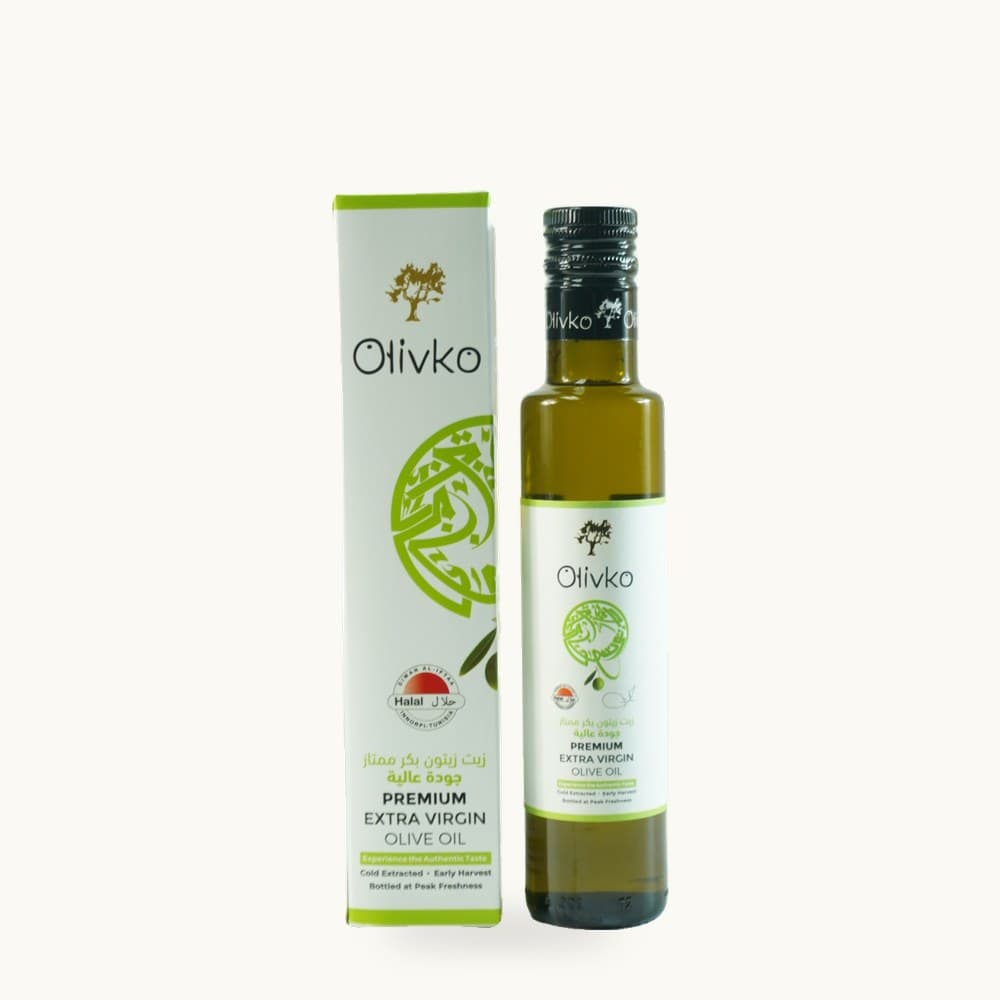
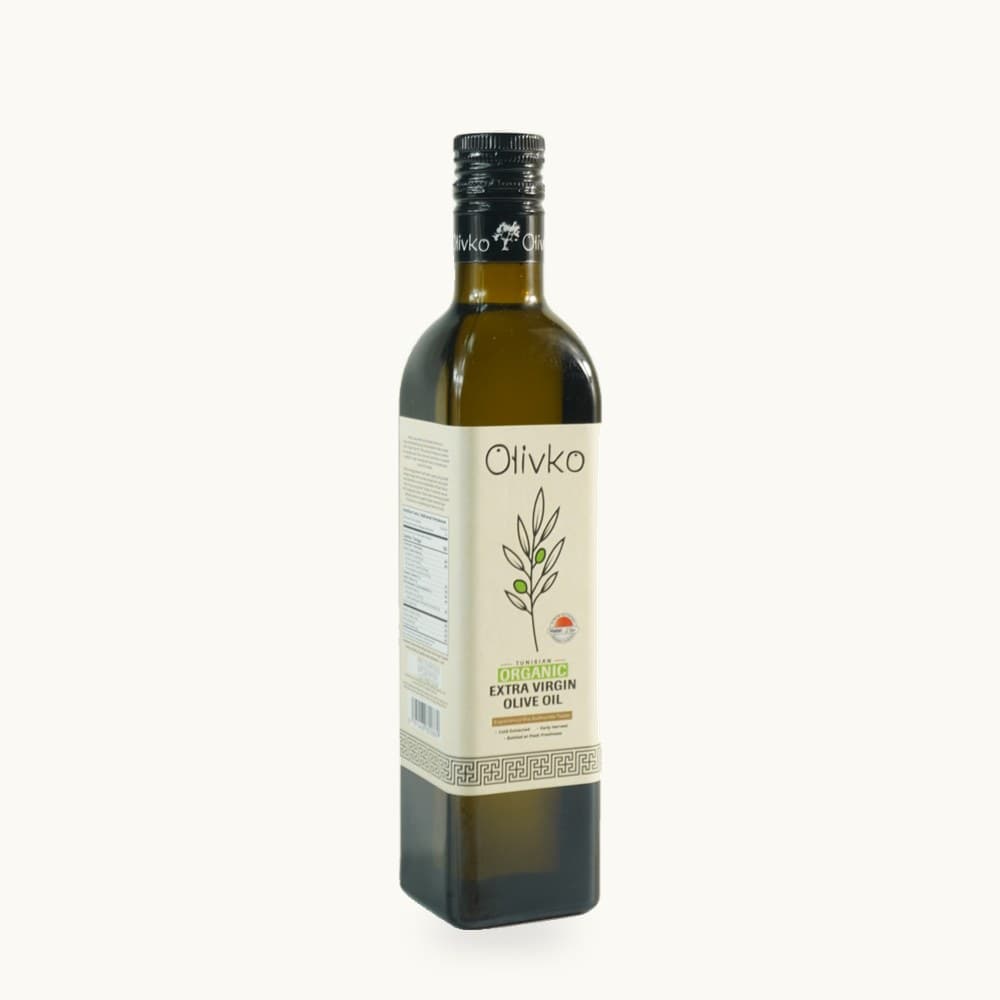
For example, the Olivko olive oil we import from Tunisia has an acidity below 0.2% (lab report: 0.18%), well under the 0.8% limit.
3. Choose a dark bottle or a tin
Light and heat spoil the taste of olive oil. Dark glass bottles or tins protect it far better than clear plastic. Avoid bottles that have sat for a long time under bright shop lights or in sunlight.
4. Look at the best-before date
Olive oil is not wine — it does not get better with age. Pick a bottle with a best-before date that is still well ahead. Once opened, use it within a few months to enjoy its fresh flavour.
5. Make sure the origin is stated
Good olive oil usually names its country of origin clearly. Labels that only say "packed in" or "a blend of oils from several countries" tell you less about the source. Tunisia, Spain, Italy and Greece are among the main producers. Olivko comes from Tunisia.
6. Check for recognised certificates
Independent certificates give extra confidence in how an oil is produced and handled. Look for organic marks (such as Ecocert, USDA Organic or EU Organic) and food-safety certificates (such as FSSC 22000 or BRCGS). For Muslim shoppers in Malaysia, halal status matters too.
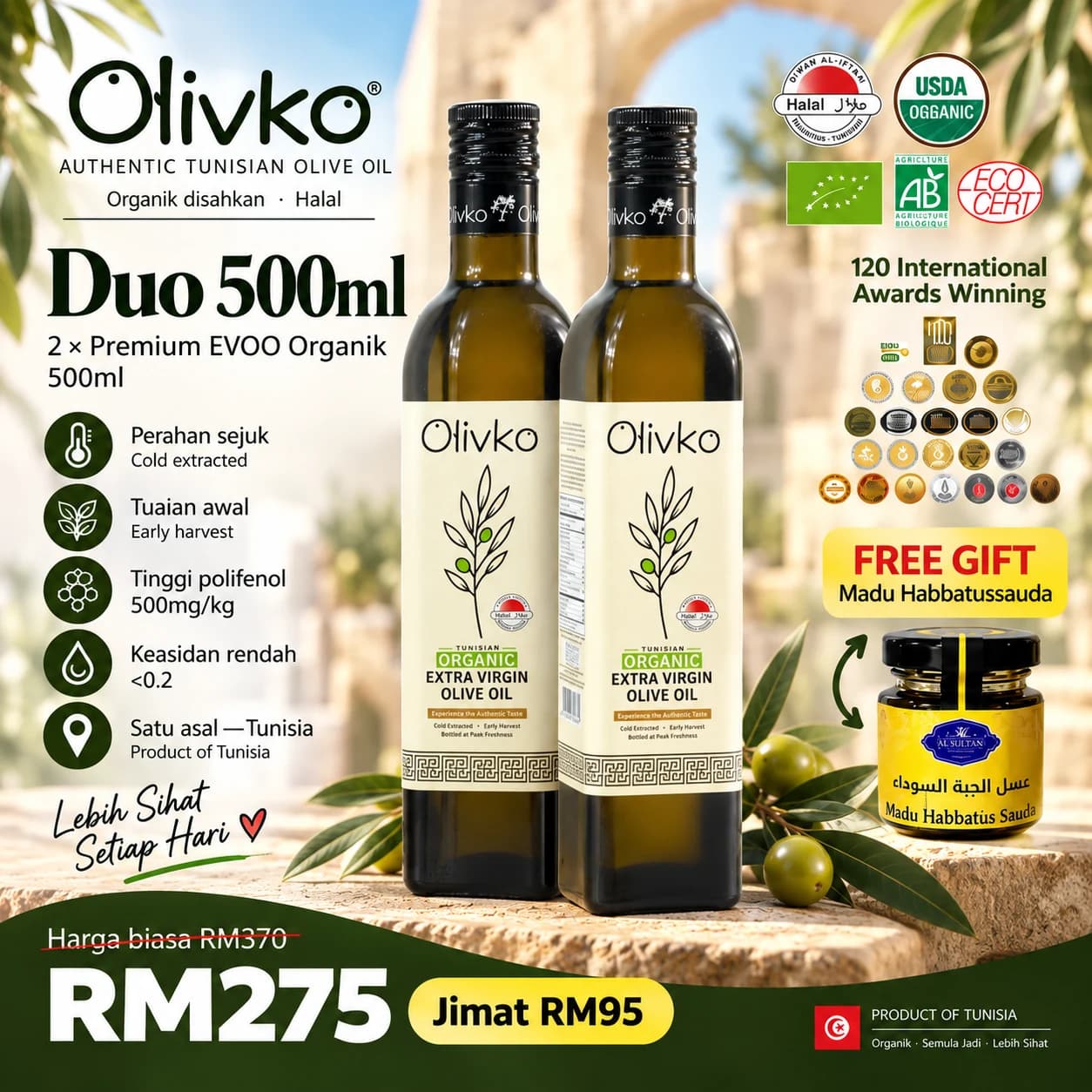
Olivko holds Ecocert, USDA Organic, EU Organic, FSSC 22000 and BRCGS certification, is FDA registered, and is Halal recognised by JAKIM.
7. Taste and smell: how to recognise extra virgin olive oil
Fresh extra virgin olive oil usually smells of olives, cut grass or green leaves. It may taste slightly bitter and leave a peppery "catch" at the back of the throat. That is normal for a good extra virgin — not a sign that it has gone off. A smell of crayons, vinegar or stale nuts, on the other hand, points to old or badly stored oil.
The popular "put it in the fridge" test on social media is not a reliable way to tell whether an oil is genuine. It is better to rely on the label, certificates and a supplier you can identify.
8. Buy from a supplier you can identify
Choose a seller who tells you who the importer is, where the product comes from and how to contact them. AlSultanFood is a brand of Easy Global Ventures Sdn. Bhd. in Seri Kembangan, Selangor, and the official Malaysian importer of Olivko olive oil.
Polyphenols: what to know
Polyphenols are natural compounds in olives that also contribute to the bitter, peppery taste of extra virgin oil. Levels vary with the olive variety, harvest time and process. Olivko contains around 500 mg/kg of polyphenols, up to 600 mg/kg.
Which size is right for you?
- Trying it for the first time? Olivko 250ml or the Duo 250ml.
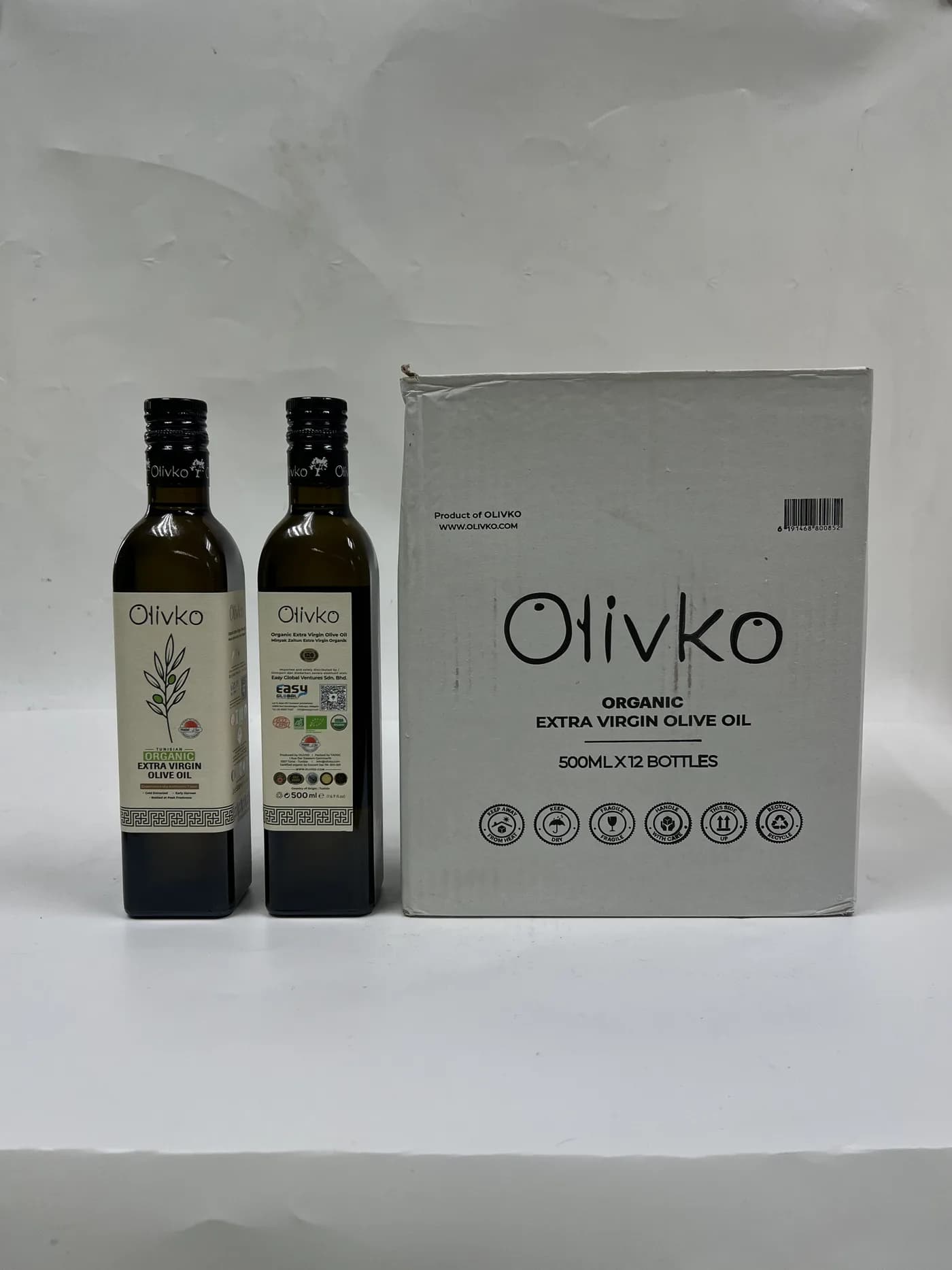
- For everyday cooking? Olivko 500ml or the Duo 500ml.
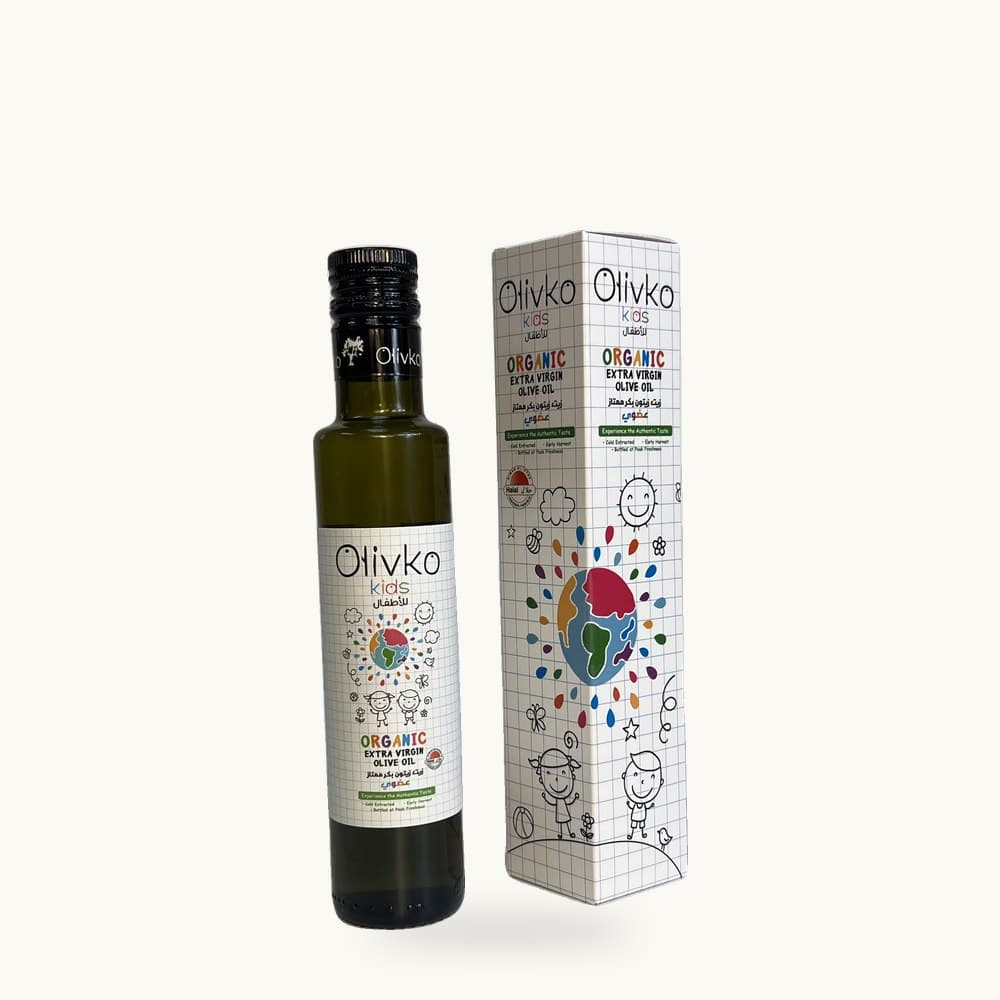
- For children? Olivko Kids 250ml, or the Family Set with a 500ml and a Kids 250ml.
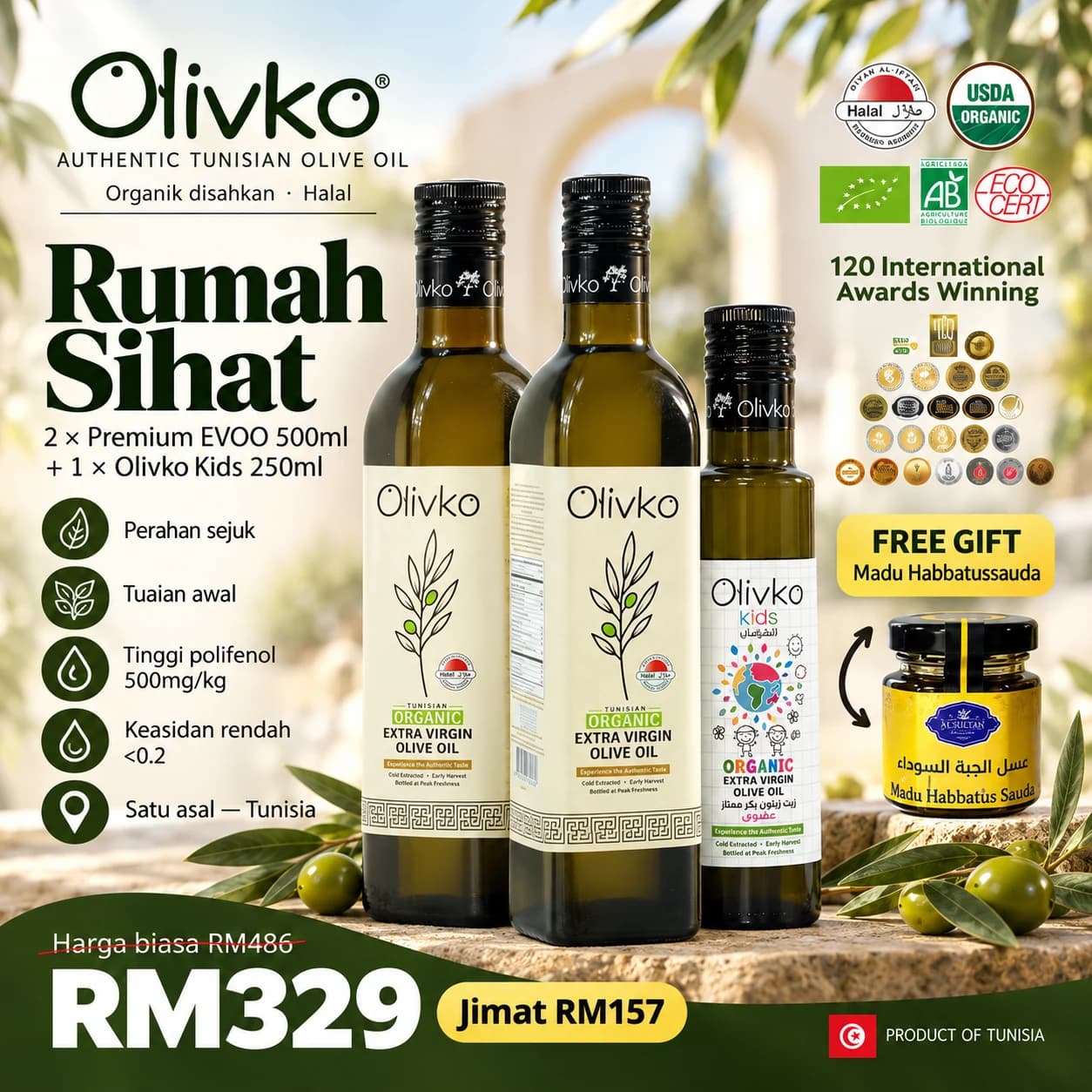
- For the whole household? The Rumah Sihat Set — two 500ml bottles and one Kids 250ml.
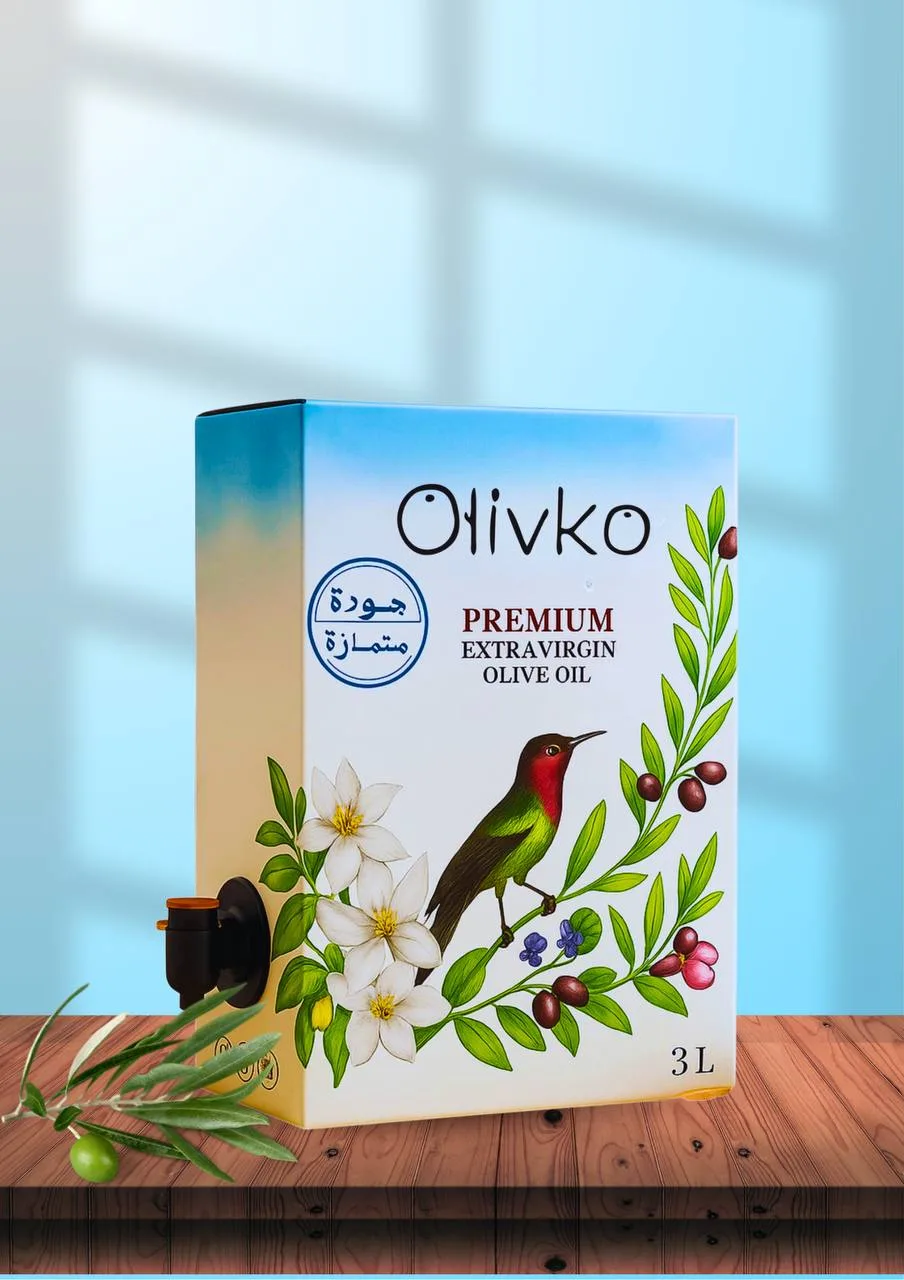
- For catering or a busy kitchen? Olivko 3 Litre.
Every Olivko bundle comes with a FREE jar of Madu Habbatussauda (black seed honey). Current prices are shown on each product page.
Olivko
Olivko Rumah Sihat Set – Organic Extra Virgin Olive Oil
2 × 500ml + 1 × Kids 250ml
RM329Regular price: RM486
How to use extra virgin olive oil in the kitchen
Many people think extra virgin olive oil is only for salads. In fact it fits easily into everyday home cooking:
- Drizzle it raw over salad, soup, rice, hummus or steamed vegetables for a richer taste.
- Dip bread — pour a little onto a plate, add salt and black pepper, and dip.
- Light frying — good for onions, vegetables and eggs over medium heat.
- Marinades — mix with garlic, lemon juice and herbs for chicken or fish.
To enjoy the fruity taste and fresh aroma of extra virgin oil to the full, use it raw as a finishing touch once the dish is cooked.
How to store olive oil
- Keep it in a cool, dark place, away from the stove and windows.
- Close the cap tightly after use.
- There is no need to refrigerate it. If it turns cloudy in the cold, leave it at room temperature and it will clear again.
Want to know more about Olivko? Read our Olivko olive oil guide. Delivery anywhere in Malaysia is a flat RM9 and free on orders from RM150.
Tags
- #MinyakZaitun
- #ExtraVirgin
- #EVOO
- #Olivko
- #OliveOilMalaysia
- #AlSultanFood